


17 Sep How to Temporarily Make a Dress Shorter: Easy No-Damage Methods
My sister lent me her gorgeous emerald dress for an engagement party last spring. There was one problem: the hem touched the floor, and I wanted to wear flat shoes. A permanent alteration was out of the question since the dress wasn’t mine, and as fashion experts at www.thestyletribune.com frequently warn, DIY cutting or sewing on borrowed garments often leads to irreversible fabric damage. Therefore, I needed a quick, risk-free fix. A few carefully placed pins and ten minutes later, the hem sat perfectly at my knees. My sister never knew, and I danced all night in total comfort.
In this guide, you will learn how to temporarily make a dress shorter using methods that leave no marks. Additionally, you will learn which method fits each fabric and occasion. Let’s dive in.
Key Takeaways
- No damage: Every method in this guide keeps the original hem fully intact.
- Speed: Most fixes take under fifteen minutes with items you already own.
- Options: Belts, pins, tape, and loose stitches all work as temporary hems.
- Fabric matters: Heavy fabrics need pins or stitches, while light fabrics suit tape.
- Flexibility: Therefore, you can wear one dress at many lengths for many events.
Why Choose a Temporary Hem
Permanent alterations are not always the answer. Sometimes a dress only needs to be shorter once. Maybe you rented it, borrowed it, or plan to resell it. Maybe your shoes changed at the last minute. In these cases, cutting the hem destroys value and flexibility.
The environmental case is strong too. According to the Environmental Protection Agency, Americans generated over 11 million tons of textile waste in 2018. Additionally, research from the waste charity WRAP found that extending the life of clothing by just nine months reduces its carbon, water, and waste footprints by 20 to 30 percent each. Temporary fixes help clothes live longer without permanent changes.
Rental fashion makes this skill even more useful. Services that lend occasion dresses now charge fees for damage. A pinhole from careless work can cost you money. However, the methods below protect the fabric completely.
There is also a style benefit. One dress becomes many dresses. Wear it long with heels for a formal dinner. Then, shorten it for a beach vacation the next week. As a result, a small wardrobe works much harder. In short, a temporary hem costs nothing and opens options.
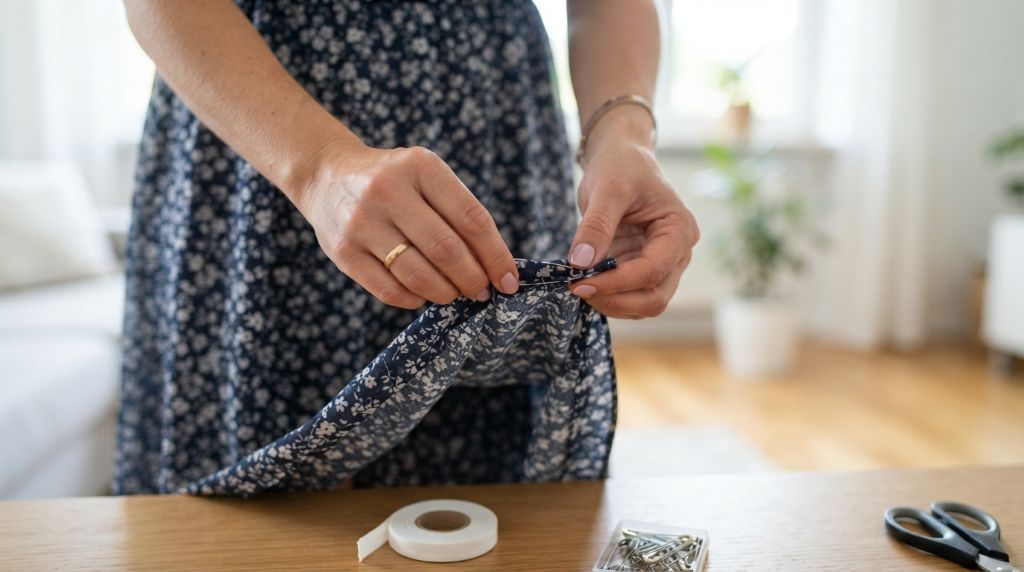
The Belt and Roll Method
This is the easiest method of all, and it needs zero tools beyond a belt. It works best on casual dresses, shirt dresses, and any style with a natural waist.
Here is how it works. First, put on the dress and decide your target length. Next, gather the excess fabric evenly around your hips, just like scrunching a long skirt. Then, roll the gathered fabric up and under itself, against your body. The bulk now hides under a wide belt at your natural waist. Pull the belt snug, and the rolled fabric stays hidden all day.
Follow these tips for a smooth result:
- Spread the gathers evenly, so there are no side bulges.
- Use a wide, structured belt, because thin belts cannot hold fabric.
- Smooth the outer fabric with your hands after belting.
- Check the mirror from all angles before you leave.
Additionally, this method works through dressy events too. A wide satin or metallic belt over a rolled waist looks intentional, even elegant. I used this exact trick on a flowy maxi dress for a garden party. Guests assumed the dress was designed that way.
However, know the limits. Very thin or slippery fabrics can creep out from under the belt. Stiff fabrics also resist rolling. Therefore, test the look at home first, and sit down to check the hold.
The Safety Pin Method
Safety pins create a hidden, adjustable hem in minutes. This is my go-to method, and it held that borrowed emerald dress perfectly.
The technique is simple. Put on the dress with your chosen shoes. Fold the hem up and under to your ideal length. Then, pin the folded fabric to the inside of the dress every three to four inches. Point the pins downward and keep them inside the fold, so no metal touches your skin. The original hem stays completely untouched.
Follow these steps for the best hold:
- Turn the dress inside out and study the existing hem first.
- Fold the fabric up evenly, and check the outside in a mirror.
- Insert pins through the fold only, not through the outer layer.
- Space pins closer together on heavy fabrics.
- Sit, walk, and bend in front of the mirror to test security.
Choose small, smooth safety pins for delicate fabrics. Larger pins hold denim and linen firmly. Additionally, gold or black pins blend better if one slips slightly out of view.
One word of caution. Pull the dress on and off gently while pinned, because yanking can pop a pin open. I keep a small tin of mixed safety pins in my travel bag for exactly this reason. Therefore, I am never more than five minutes from a perfect hem.
Hem Tape and Fashion Tape Options
Double-sided tape offers another fast, tool-free solution. Two products work here: fashion body tape and fabric hem tape used without ironing.
Fashion tape is a thin, clear, double-sided adhesive. Dancers and stylists use it constantly. For a temporary hem, fold the dress under and place short tape strips between the fold and the outer layer. Press firmly for thirty seconds. The hem holds for a full evening in most cases.
For a longer hold, iron-on hem tape used without an iron still grips lightly. However, plain press-and-hold tape is simpler for one-night fixes. Consider these points before choosing tape:
- Works best on light to medium fabrics, like chiffon and jersey.
- Struggles with heavy denim, thick knits, and rough linings.
- Avoid tape on silk, velvet, and lace, because adhesive can mark them.
- Body heat loosens tape, so check the hem after dancing.
Additionally, store a small roll of fashion tape in your purse for emergencies. It fixes hems, stray bra straps, and gaping necklines alike. A friend once fixed a drooping hem in a restaurant bathroom with two strips from my purse. Therefore, this tiny roll earns its place in every bag.
Always test tape on a hidden spot first, such as the inside of the hem. Wait five minutes, then check for residue.
The Temporary Stitch Method
Need a stronger hold that still comes out later? A loose basting stitch is the answer. This is essentially a real hem, except you remove it afterward with one gentle pull.
Thread a needle with contrasting thread, so you can see it clearly later. Fold the hem up and pin it as described earlier. Then, sew long, loose running stitches around the fold. Keep the stitches big, and the tension relaxed. Tie a simple knot at the end, and trim the thread.
Because the stitches are loose, they hold through a full event, including dancing. However, they slide out in seconds when you are ready. Simply snip the knot and pull the thread. The fabric springs back with no evidence at all.
This method suits heavy fabrics best, including:
- Denim and heavy cotton, which defeat tape entirely.
- Wool blends and thick crepe for winter events.
- Lined formal dresses: pin each layer separately.
My mother used this trick throughout my school years. She hemmed my uniform skirts longer each year with loose stitches. As a result, one skirt lasted three growth spurts. Therefore, consider temporary stitching for children’s dresses too, because kids outgrow hems fast.
Just remember one rule. Never machine stitch if you want it temporary. Hand stitches alone remove cleanly.
Final Thoughts
A too-long dress is never a dead end. Belts, pins, tape, and loose stitches can all create a temporary hem in minutes. Start with the safety pin method for reliability, or grab a belt for zero-effort speed. Match the method to your fabric, and test everything in a mirror first. If you’re also looking for outfit ideas, this guide on what to wear with cropped sweatshirt women offers practical styling inspiration for creating balanced looks.
That borrowed emerald dress taught me the value of reversible fixes. I returned it perfectly intact, and I have used these tricks dozens of times since.
Now I want to hear from you. Have you ever rescued a long dress for one night? Share your favorite trick in the comments below. Additionally, if this guide helped you, please share it with a friend who is always tripping on her hems.
Frequently Asked Questions
How do I temporarily shorten a dress without sewing?
Fold the hem under and secure it with safety pins or fashion tape. A wide belt over a rolled hem also works well.
Will safety pins damage my dress?
No, not if you pin through the fold only. Small, smooth pins leave no marks on most fabrics.
How do I shorten a dress for just one night?
Use fashion tape or loosely placed safety pins. Both hold for an evening and come off in minutes.
Can I temporarily shorten a lined dress?
Yes, but pin or stitch each layer separately. This keeps both layers hanging evenly at the new length.
How do I make a temporary hem last all day?
Place pins or tape closer together, then sit and walk in a mirror to test. Add a few extra pins before dancing.
Sorry, the comment form is closed at this time.